01 / 05
The pile
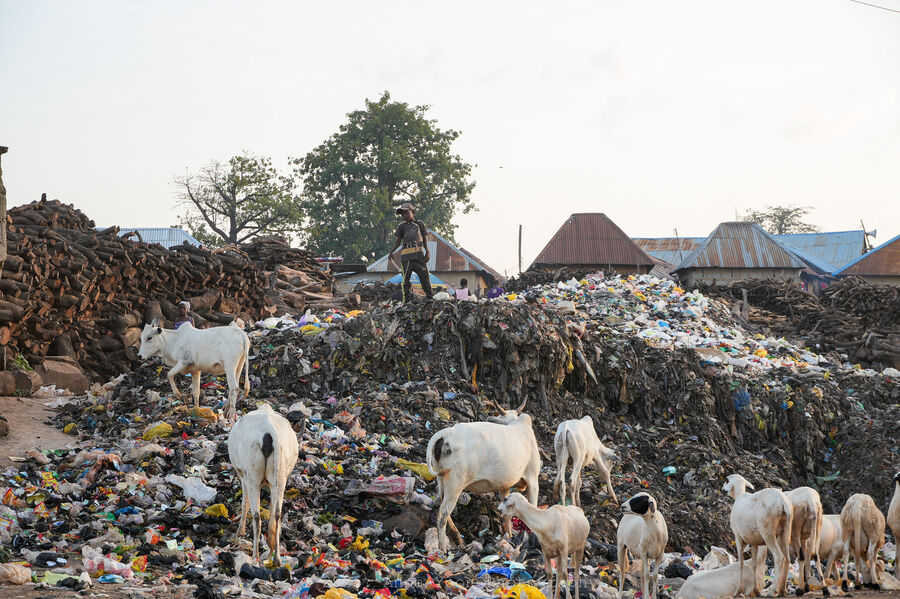
A waste pile that was a breeding ground for malaria and other disease. Residents say everyone in the village had lost someone to it.
In the photograph: cattle and goats feeding on the pile, a few metres from the roofs.
Our world is dying,
so we had to do something about it.
Mabushi, Abuja
Waste and river cleanups where collection does not reach. Crews are paid for the haul, and every haul is on the record.
02Purpose
A cleanup is finished when the waste is counted and gone.
01
Boots, gloves, sacks, trucks. Local partners run the days and Aquari publishes every one of them.
02
Loads are counted and photographed. The counts and photographs land in the public record.
03
Supporters send AQUARI from the app, on Base, straight to a project wallet.
20+
countries with community cleanups
Days run by the people who live there.
200+
people at Mabushi, Abuja
Paid for the haul.
11,000+
people in the community
On Telegram, X and in the app.
As of September 2026
The app runs the day: find the work, get paid in AQUARI for a verified haul, back a crew, or vote on where the next cleanup goes. The chain is only the ledger.
Before the crews came, it looked like this.
03Evidence
01 / 05
A waste pile that was a breeding ground for malaria and other disease. Residents say everyone in the village had lost someone to it.
In the photograph: cattle and goats feeding on the pile, a few metres from the roofs.
02 / 05
The village first took us for another outside NGO that would film and leave. The work was done by 200+ people, paid for the haul.
In the photograph: volunteers and residents together in front of the pile, before the work started.
03 / 05
Crews, residents and volunteers on the same line, hand-loading from the pile. Every person logged and paid.
In the photograph: a long line of crew in blue shirts along the face of the pile, some bent over the waste.
04 / 05
600+ truck trips to the landfill, each one paid and recorded. About 21,000 tonnes, estimated by volume.
600+
truck trips
21,000 t
estimated by volume
About 35 tonnes a trip, all of it from one pile beside people's homes.
In the photograph: a loader filling a tipper. Behind it, residents sit under the tents.
05 / 05
Cleared ground where the pile stood. Residents prayed for the crews, and the work carries on from here.
In the photograph: the same plot from the drone, before and after. The ringed house is in both frames.
Mabushi, Abuja, January 2026.
04Films
05AQUARI
A transfer leaves a supporter's wallet, lands on Base, and reaches the coordinator running the day. Anyone can follow it there, long after the day is done.
Cleaners are paid in AQUARI for verified cleanup work. The app is where that day is logged.
Supporters send AQUARI to a project wallet. That is how a cleanup day gets funded.
Supporters vote on where the crew goes next. Back a day, then decide the one after it.
06Journey
A cleanup group that wanted the work written down, not just done.
Emergency response clearing riverbanks and flood debris across Belgium and the Netherlands.
Weekly cleanups launched with local partners in India.
A public place to log cleanup events and document what was collected.
Waste and river days with local crews.
Self-custodial wallets, event maps and photographic haul registries ship in the app.
Waste cleanups with local crews.
Cleanup funding moves to Base for low fees and a public record.
Our own team on the ground, in person. The programme continues.
200+ people clear a disease-breeding waste pile in 600+ truck trips. About 21,000 tonnes, estimated by volume.
It is listed in the app. Join it or fund it, and it becomes entry eleven.
2021 to 2026.
From flood debris on Belgian riverbanks to a cleared plot in Abuja. The same work, written down every time.
07FAQ
What crews and supporters ask us first.
[email protected]Next cleanup day
Find a cleanup near you and join the crew. Read the haul records. Or fund a day, then vote on where the next one happens.
Questions? [email protected]
